
Blog
The best contact lens care solutions to avoid eye infections

Why Do Contact Lenses Need Special Care?
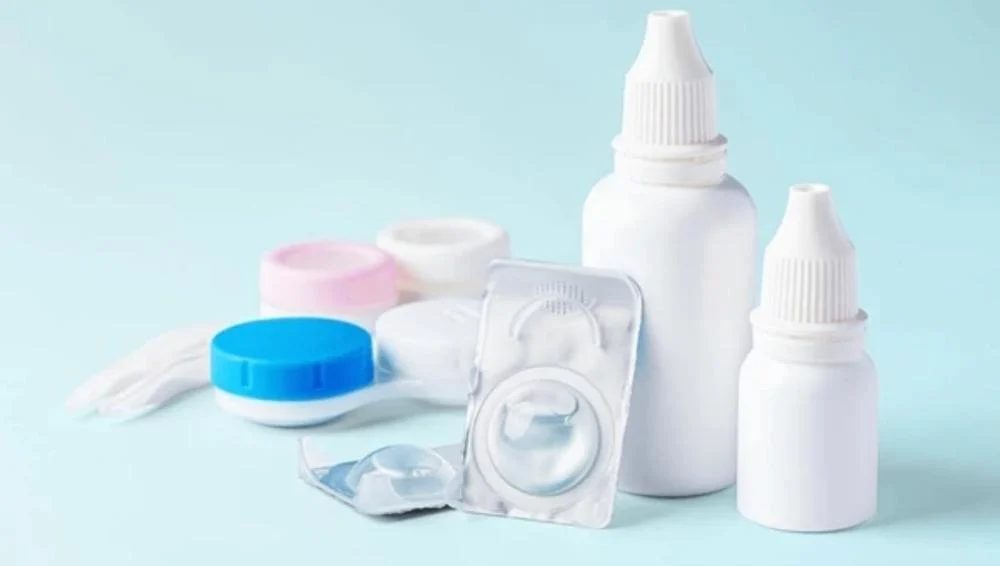
Contact lenses require special care because they sit directly on the eye’s surface. Any negligence in cleaning or storing them can allow bacteria, viruses, and fungi to transfer easily to the cornea and conjunctiva.
Proper contact lens hygiene significantly reduces the risk of eye infections, corneal ulcers, dry eye, and allergic reactions—complications that can impair visual clarity over time.
In addition, contact lenses are made of delicate, highly specialized materials that can be damaged or lose their oxygen permeability if not cleaned with the appropriate solution or if worn longer than the recommended duration.
For these reasons, daily lens care—such as washing and drying hands before handling lenses, using an appropriate disinfecting solution, and strictly following the prescribed wearing schedule—is essential to protecting eye health and ensuring safe, comfortable vision.
Key Steps for Proper Contact Lens Cleaning
To clean contact lenses correctly and reduce the risk of eye infections, always start by washing your hands thoroughly with soap and water, then dry them with a clean, lint‑free towel before touching your lenses.
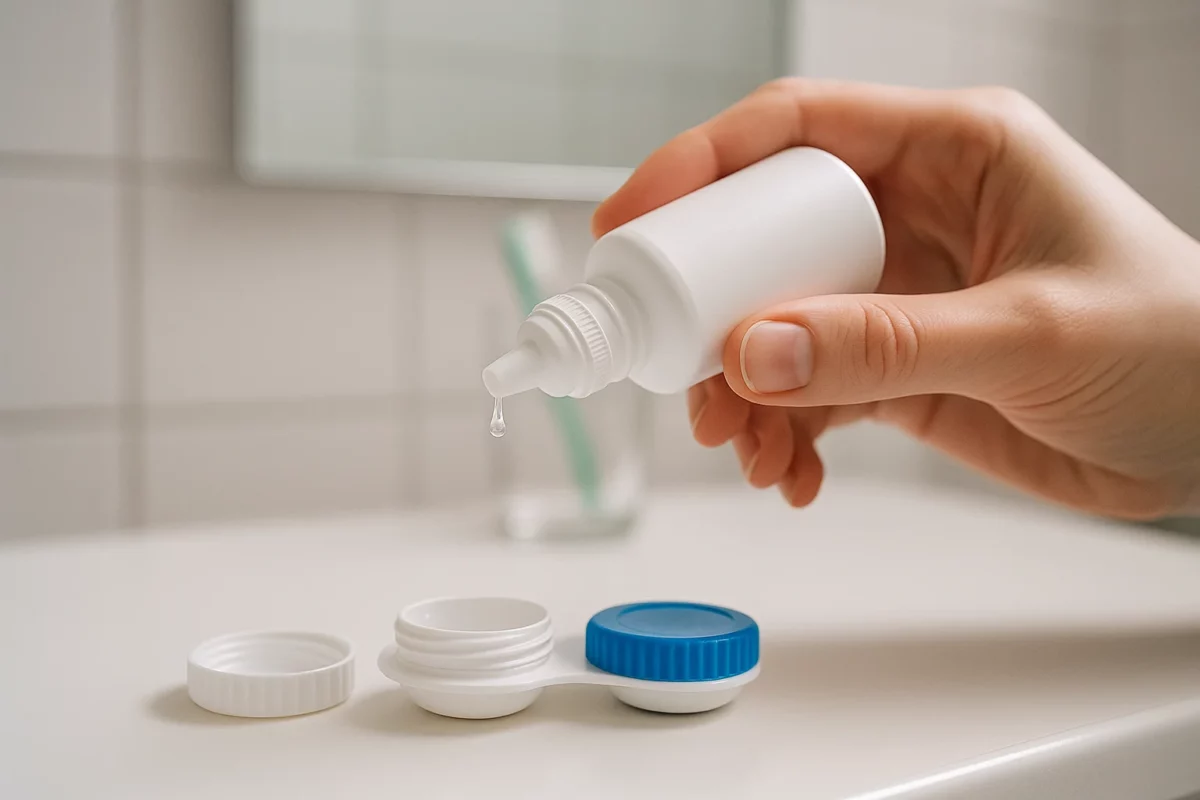
Place the contact lens in the palm of your clean hand and apply a few drops of a sterile contact lens disinfecting solution. Do not use tap water or saliva under any circumstances.
Gently rub the lens with the tip of your finger in circular motions for a few seconds to remove deposits and protein buildup. This “rub” step remains essential even when using “no-rub” solutions, as recommended by ophthalmologists.
Rinse the lens with the same medical-grade solution, then place it in a clean lens case filled with completely fresh solution. Avoid reusing old solution or mixing different types of solutions together.
Clean the contact lens case itself every day using the solution, then leave it to air-dry, and replace the case every three months—or as advised by your eye care specialist—to maintain optimal hygiene.
By consistently following these basic contact lens cleaning steps, you help protect your eyes from redness, allergic reactions, and bacterial infections, while also extending the lifespan of your lenses and maintaining clear, comfortable vision.
Best Recommended Solutions and Products for Disinfection
Multipurpose contact lens solutions are considered the best option for daily disinfection and cleaning of lenses. They are specifically formulated to remove deposits and protein build‑up and to eliminate bacteria and microorganisms, without damaging the eye or the lens material.
Make sure to choose a contact lens solution from a reputable, medically recognized brand, and verify that it is suitable for your lens type (soft or rigid) and clearly labeled as a disinfecting solution on the packaging.
Completely avoid using plain water, tap water, or homemade mixtures as a substitute for proper disinfecting solution, as these practices significantly increase the risk of serious infections such as microbial keratitis.
Ophthalmologists recommend using sterile saline solution only for rinsing the lenses after they have been disinfected, and to replace the solution in the lens case every day without ever reusing old solution.
If you have sensitive eyes or suffer from dry eye, consult your ophthalmologist or optometrist to determine the most suitable contact lens solution for your condition, such as preservative‑free formulations or hydrogen peroxide–based systems, and strictly follow the instructions provided in the patient information leaflet.
Common Contact Lens Mistakes and How to Avoid Them
One of the most frequent mistakes people make with contact lenses is wearing them longer than recommended. This reduces the amount of oxygen reaching the cornea and increases the risk of infections and eye redness. It’s essential to follow the wearing schedule prescribed by your eye care professional or stated by the manufacturer.
Another serious mistake is sleeping in contact lenses or wearing them while showering or swimming. This makes it easier for bacteria and parasites to enter the eye. Lenses should always be removed before going to bed and before any water-related activity.
Many people handle their lenses with unwashed hands or rinse them with tap water instead of sterile contact lens solution, which significantly increases the risk of bacterial infection and corneal ulcers. Hands should be washed thoroughly with soap and water, then dried well before touching lenses, and only sterile contact lens solutions should be used—never reuse old solution.
It is also common to ignore the expiration dates of contact lenses or their solutions, or even to share lenses with others. This is a dangerous practice that can directly transmit infections. Lenses must be replaced as scheduled, any expired products should be discarded, and lenses or their cases must never be shared under any circumstances.
Finally, neglecting to see an eye specialist when experiencing pain, burning, or blurred vision is a serious error. Early examination allows timely management of any problems related to poor lens hygiene, preventing them from progressing to sight‑threatening complications.
Warning Signs of Contact Lens–Related Infections
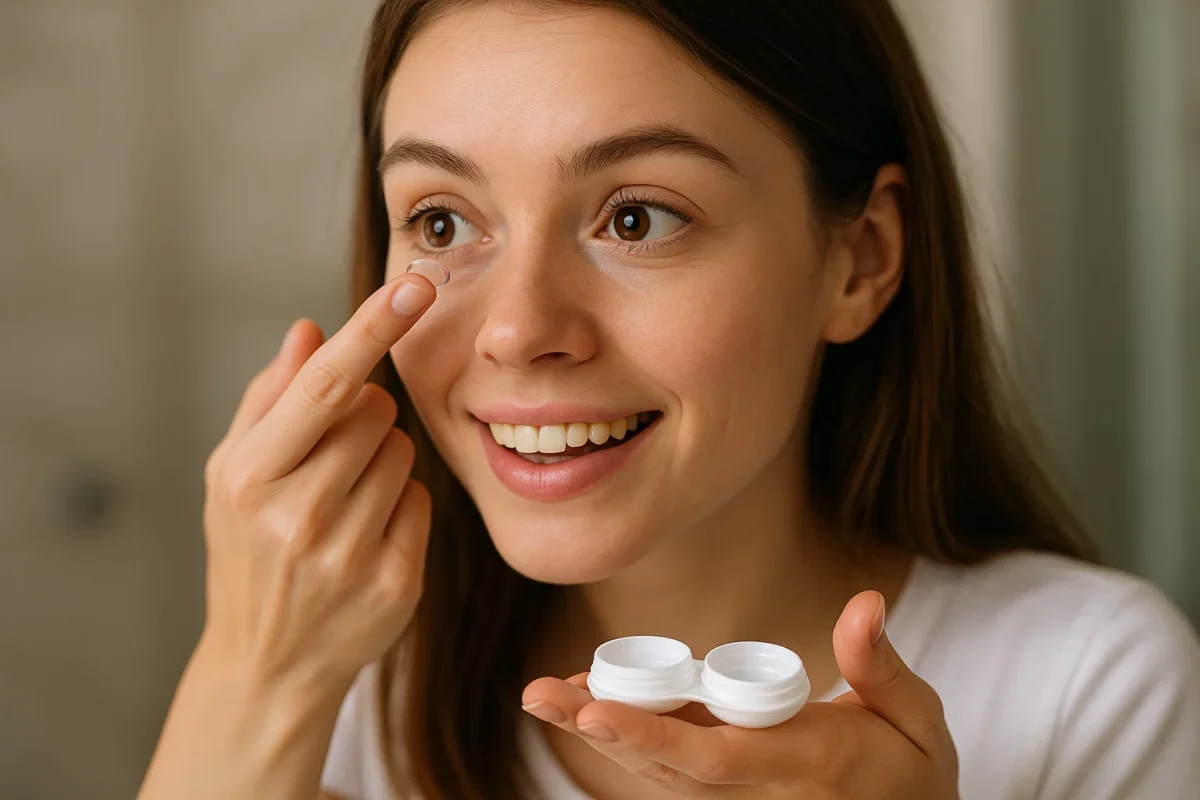
Noticing warning signs that suggest an eye infection from contact lenses means you should stop wearing them immediately and see an eye specialist, especially if you rely on lenses every day.
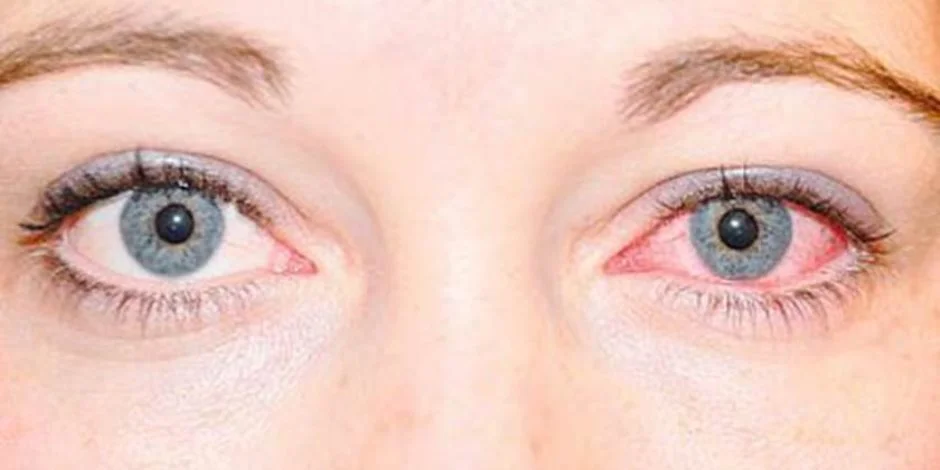
The most prominent warning signs include a sudden burning or stinging sensation in the eye, marked redness that doesn’t improve after removing the lenses, and a feeling of dryness, roughness, or as if there is a foreign body in the eye.
Blurred vision, seeing halos around lights, or marked sensitivity to light (photophobia) are also concerning symptoms that may indicate keratitis (corneal inflammation) linked to improper contact lens hygiene or misuse.
You may also observe excessive tearing, or notice sticky or discolored discharge from the eye, along with pain when moving the eye or touching the eyelid.
If you experience any of these contact lens–related warning signs, remove your lenses immediately, do not reuse them, and seek urgent medical assessment to prevent serious complications that may affect corneal health in the long term.
Batal Vision Contact Lenses: Enhanced Comfort and Superior Protection for Your Eyes
Batal Vision contact lenses are an advanced option for individuals seeking everyday comfort and effective eye protection, while maintaining clear, stable vision throughout the day.
These lenses are designed to allow an adequate amount of oxygen to reach the cornea, which helps reduce dryness and redness, making them suitable for extended wear under ophthalmologist supervision.
Certain Batal Vision lens types are equipped with an advanced moisturizing layer that helps retain the natural tear film on the lens surface, easing discomfort in people who suffer from dry eye.
In addition, several Batal Vision products offer extra protection through a built-in UV filter, which helps reduce the harmful effects of ultraviolet radiation on the cornea and the crystalline lens.
When used according to your eye doctor’s recommendations—and with proper contact lens care, including regular cleaning and timely replacement—Batal Vision contact lenses can be a safe and practical choice for those looking to enhance visual quality while preserving long-term eye health.