

Blog
Does wearing glasses cause headaches?


What’s the link between glasses and headaches?

There is a strong connection between wearing glasses and experiencing headaches. Uncorrected vision problems, incorrect lens power, or using old, outdated glasses can all lead to persistent headaches, especially after long periods of reading or using a smartphone or computer.
When the prescription of the lenses does not match your actual visual needs, the brain and the eye muscles responsible for focusing have to work harder. This extra effort can cause what is known as eye strain, which often presents as headaches, a feeling of heaviness around the eyes, and blurred or fluctuating vision.
In addition, certain lens types—or the absence of blue‑light–filtering coatings—may worsen headaches that are triggered or aggravated by prolonged screen use.
On the other hand, choosing the right prescription glasses after a comprehensive eye examination and accurate measurement of your visual requirements can help reduce headaches and improve visual comfort. For this reason, it is advisable to consult an ophthalmologist or optometrist if you frequently experience headaches associated with wearing glasses or performing visually demanding tasks.
Causes of Headache Related to Wearing Glasses
Lens power not matching the actual prescription
When the lens power does not match your true refractive error, your eyes and brain have to work harder to focus, which can trigger headaches linked to wearing glasses.
This mismatch may result from inaccurate refraction, choosing lenses that are too strong or too weak, or using low‑quality lenses that fail to transmit light properly to the retina.
Such visual strain can cause headaches in the forehead or around the eyes, especially after prolonged reading or computer use.
It is therefore essential to ensure an accurate eye exam and to choose lenses that correctly match your prescription, particularly if you have myopia (short‑sightedness), hyperopia (long‑sightedness), or astigmatism, in order to reduce the likelihood of glasses‑related headaches.
Wearing glasses with an outdated prescription
Using prescription glasses based on an old prescription is among the most common causes of headaches associated with wearing glasses.
Over time, your refractive error can change without you noticing, and you may continue to use glasses that no longer reflect your current visual status.
This discrepancy between your actual visual needs and the prescription in your lenses forces the eyes to constantly adapt, leading to eye strain, mild visual blur, and recurrent headaches.
These headaches typically appear towards the end of the day or after intense visual tasks such as prolonged screen work or long periods of reading.
Regular check‑ups with an ophthalmologist and updating your glasses prescription when needed help prevent headaches caused by relying on outdated lenses.
Incorrect optical centration of the lenses
Even with the correct prescription, improper alignment of the lenses with the pupils can cause noticeable headaches when wearing glasses.
Ophthalmic lenses are designed so that the line of sight passes through a specific optical center; when this point does not align with the center of the eye, you end up looking through a less optimal part of the lens.
This misalignment leads to slight image distortions, eye strain, and a sense of discomfort or mild dizziness, especially with high prescriptions or in cases of astigmatism.
Common causes include frames that do not fit the face properly, lenses that were not mounted accurately, or glasses that frequently slip out of position.
Having lens positioning adjusted by an optometrist or optician can significantly reduce glasses‑related headaches and improve visual clarity.
Frame pressure on the nose or sides of the head
Pressure from the frame on the nasal bridge or the sides of the head can cause a mechanical headache, even when the prescription itself is perfectly accurate.
A tight or poorly fitting frame compresses nerves and blood vessels in these areas, leading to a feeling of heaviness or pain that can radiate to the forehead or behind the eyes.
This type of headache usually develops after wearing the glasses for several hours and may be accompanied by visible marks where the frame rests or a persistent feeling of discomfort whenever the glasses are adjusted.
Choosing a lightweight frame that fits the facial contours well, and correctly adjusting the nose pads and temples, greatly reduces headaches due to frame pressure.
If pain persists despite adjusting the glasses, it is advisable to consult an ophthalmologist or eyewear specialist to rule out other potential causes of headaches associated with wearing glasses.
Is it normal to get a headache when wearing new glasses?
Experiencing headaches during the first few days of wearing new glasses is quite common and is usually considered normal, as long as the pain is mild and temporary.
This happens because your eyes and brain need time to adapt to the new prescription and lens power or type—especially if it’s your first pair of prescription glasses, your prescription has changed significantly, or you’ve started using progressive lenses (multifocal lenses).
During this adjustment phase, you may notice mild headaches, eye strain or pressure around the eyes, or slight visual distortion or blur. These symptoms typically fade within a few days to about two weeks as you continue to wear the glasses correctly and consistently.
However, if the headache persists longer than that, is severe, or is accompanied by dizziness, nausea, or significant visual disturbance (such as marked blurring or double vision), this may indicate that the prescription is not accurate for you, or that there is another underlying vision problem. In this case, you should see an eye specialist (ophthalmologist or optometrist) to recheck your prescription and identify the cause of the headache.
Managing headaches related to new glasses in this way helps ensure that you adapt safely to your prescription and enjoy clear, comfortable vision without complications.
Signs Your Glasses Might Be Causing Headaches
Recurrent Eye Strain
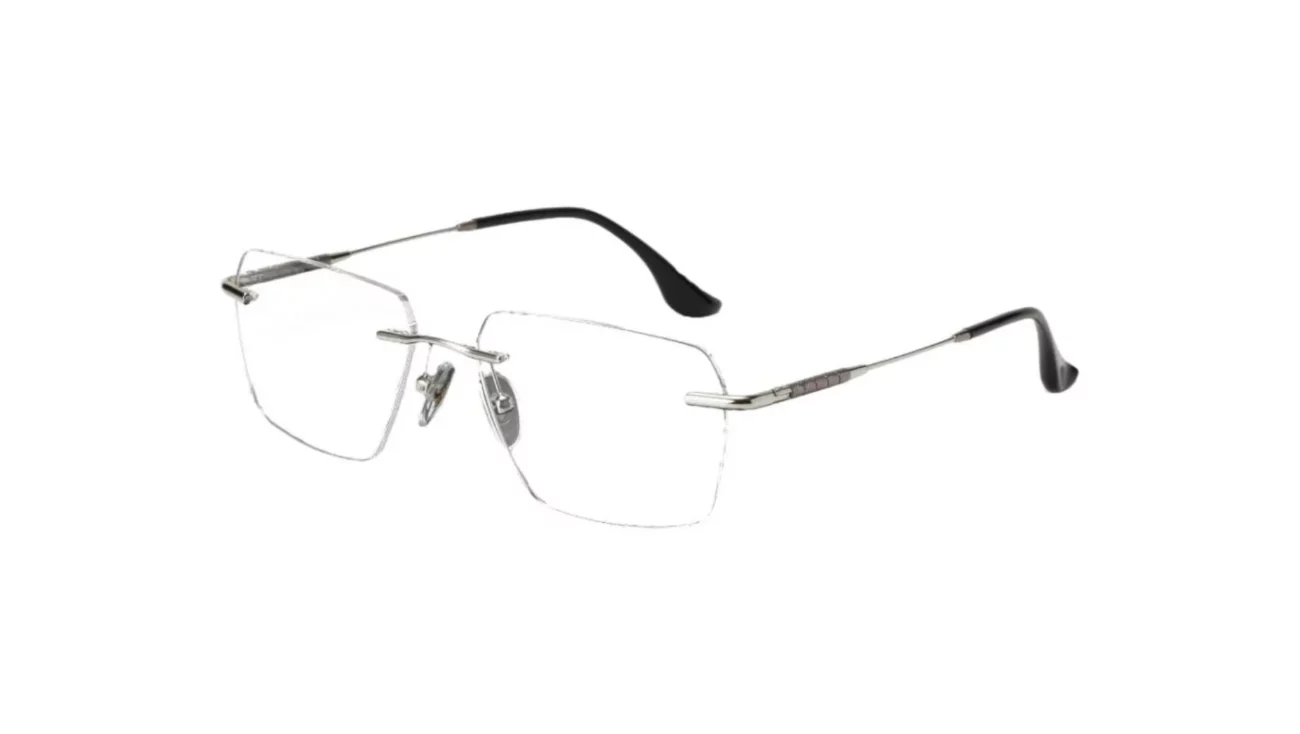
Frequent eye strain is one of the clearest signs that your glasses may be triggering your headaches, especially if you feel burning, heaviness, or fatigue in your eyes shortly after putting them on.
This can result from an incorrect lens power, an uncorrected difference in refractive error between the two eyes, or lens designs that are not suitable for your work habits, particularly if you spend long hours in front of screens.
When your eyes are forced to exert extra effort to maintain focus because the prescription or lenses are not appropriate, eye strain develops first and can then progress into a headache, often felt in the forehead or around the eyes.
If you notice that the eye strain eases or disappears when you take off your glasses or switch to another pair, this is a strong indication that your current glasses may be contributing to your recurrent headaches.
Blurred or Double Vision
Blurred vision or seeing double while wearing your glasses can be a direct sign that they are causing your headaches.
Inaccurate refraction, an error in the astigmatism axis, or improper alignment of the lenses in front of your pupils can all lead to poor visual clarity. This forces the brain to work harder to interpret and focus the image, and this constant compensatory effort often results in persistent headaches.
Under normal circumstances, your vision should improve immediately when you put on your glasses, not become hazy or uncomfortable.
If blurred or double vision continues for several days after starting new glasses, or you notice that headaches appear every time you use them, you likely need a comprehensive eye exam and an adjustment of your spectacle prescription.
Headaches After Reading or Screen Use
If you experience noticeable headaches after reading or working on a computer or smartphone while wearing your glasses, the lenses may not be suitable for your visual demands.
An incorrect prescription, or lenses that are not optimized for near working distances—especially in reading glasses or computer glasses—forces your eyes to strain to keep text and fine details in focus.
This extra effort leads to headaches that gradually worsen over time, and are often most noticeable at the end of the day or after several hours of screen use.
Paying attention to a pattern of headaches specifically associated with reading or using digital devices while wearing your glasses can help you realize that your eyewear may be a trigger, and that you may need to adjust the prescription or switch to a more suitable lens type.
Discomfort When Wearing Glasses for Long Periods
Feeling discomfort or a sense of heaviness on the nose, behind the ears, or around the eyes when wearing glasses for extended periods can be an indirect cause of headaches.
A tight or heavy frame can exert pressure on the nose and temples, leading to tension in the facial and scalp muscles, which can gradually develop into a bothersome headache.
Additionally, lenses that are not properly balanced or not positioned at the correct height can force you to tilt your head or look through the lenses at an awkward angle, increasing strain on the neck and head and contributing to headache development.
If you notice that your headache improves as soon as you remove your glasses or after switching to a lighter, more comfortable frame, this is a strong sign that your current glasses are one of the factors behind your recurrent headaches.
How to Prevent Eyeglass-Related Headaches
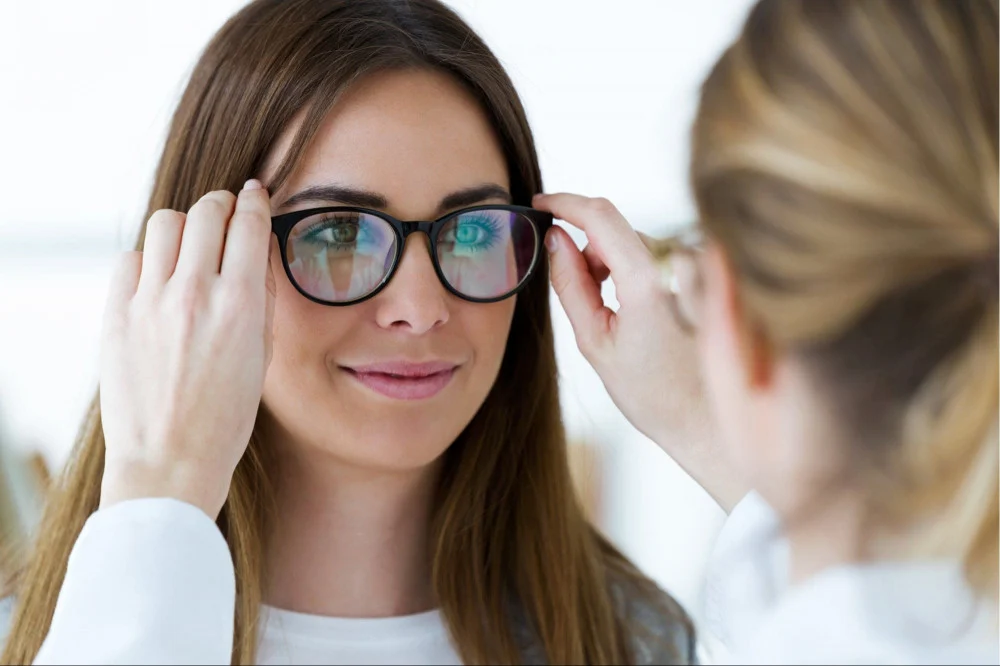
To prevent headaches caused by eyeglasses, start by making sure your eye exam is up to date and that your lens prescription is accurate. An incorrect or outdated prescription can overwork the eye muscles and lead to headaches by the end of the day.
Choose a comfortable frame that doesn’t put pressure on the sides of your head or the tops of your ears. The frame should also fit your nasal bridge properly so it doesn’t slide down, leave red marks, or cause a feeling of tightness.
Lens positioning in front of the eyes is just as important: the optical center of each lens should align with the center of the pupil. Even slight misalignment can cause visual strain and persistent headaches.
If you spend long hours in front of digital screens, opt for lenses with a blue-light filter and an anti-reflective coating, and follow the 20–20–20 rule: every 20 minutes, look at something 20 feet away for 20 seconds to reduce dryness and eye strain.
Make sure your glasses are not overly tight, and have them adjusted by an optometrist or optical specialist if you feel any discomfort around the nose, ears, or temples.
If headaches persist despite adjusting your glasses and updating your eye exam, consult an ophthalmologist or a neurologist to rule out causes unrelated to your eyewear.
When should you see an ophthalmologist?
If you suffer from recurrent or persistent headaches that get worse with reading, using your phone or computer, or watching TV, you should seriously consider seeing an ophthalmologist to check your vision and make sure your current glasses are suitable.
Headaches that continue despite wearing glasses, blurred vision, difficulty focusing on near or distant objects, or needing to move a book or screen closer or farther away to see clearly are all important signs that call for a comprehensive eye examination.
You should also consult an ophthalmologist if you develop a sudden headache accompanied by eye pain, redness, seeing halos around lights, or double vision, as these symptoms may indicate eye conditions that require urgent medical attention.
Regular eye examinations, especially for people who wear glasses or contact lenses or spend long hours in front of screens, help detect refractive errors or changes in lens power at an early stage. This can reduce eye‑strain headaches caused by uncorrected vision problems and protect your eye health over the long term.
Choose Your Glasses with Confidence at Batal Vision Optical Store in Jeddah
If you suffer from headaches related to visual strain or from wearing unsuitable glasses, getting precisely prescribed eyewear from Batal Vision in Jeddah can help reduce headache frequency and improve your day‑to‑day comfort.
At Batal Vision, the team performs a comprehensive eye examination using advanced diagnostic equipment to detect even minimal refractive errors or degrees of astigmatism—two of the most common causes of glasses‑related headaches.
Once your exact prescription is determined, high‑quality ophthalmic lenses are selected, taking into account key clinical factors such as interpupillary distance (PD), lens curvature, and specialized coatings for blue‑light filtering and anti‑reflection. These help reduce digital eye strain and headache when using computers, smartphones, and other screens.
The optometrists at Batal Vision in Jeddah also help you choose frames that suit your face shape and daily routine, while ensuring the lenses are positioned correctly in front of your eyes, which minimizes extraocular muscle strain and enhances visual clarity.
With these precise, medically guided steps, you can confidently choose your glasses from Batal Vision, support your eye health, and alleviate headaches linked to vision problems—without compromising on a modern look that fits your lifestyle.