
Blog
Choosing Glasses by Face Shape: A Complete Guide to Finding the Right Frames


Choosing glasses by face shape is not just about style — it directly affects visual comfort, frame stability, and overall facial balance. Understanding your face structure helps you select frames that enhance both appearance and eye health.
Table of Contents
Why Does Face Shape Matter When Choosing Glasses?
Choosing eyeglasses based on face shape isn’t just about style; it has a direct impact on visual comfort, eye health, and the wearer’s confidence.
Understanding whether your face is oval, round, square, heart-shaped, rectangular, or diamond-shaped helps in selecting the most suitable frame. The right frame creates visual balance between your facial features and the lens size, which in turn improves weight distribution on the nose bridge and ears, reducing pressure and headaches that can result from an ill-fitting pair of glasses.
When frames are chosen to complement face shape, they can enhance the visual field, ensure the frame stays securely in place during movement, and minimize slipping. They also improve harmony with the eyebrows and cheekbones, which positively affects overall appearance and increases patient satisfaction and adherence to wearing their glasses.
For these reasons, consulting an optometrist and selecting frames that suit the individual’s face shape are essential steps in any eye examination or lens update, to achieve the best balance between clinical effectiveness and aesthetic appeal.
How to Determine Your Face Shape – Practical Steps
To accurately identify your face shape before choosing the right pair of glasses, stand in front of a mirror in good lighting and pull all your hair back so that the full outline of your face is clearly visible.
Use a wipeable marker or an old lipstick to trace the contour of your face on the mirror, starting from the center of your forehead, following along your cheekbones, and down to your chin. Then compare this outline with common face shapes: oval, round, square, heart-shaped, or rectangular.
Focus on three main features:
- The width of your forehead
- The prominence of your cheekbones
- The length of your jawline and chin
If your forehead is the widest area, your face is likely heart-shaped. If your face is longer than it is wide with a softly rounded chin, it’s usually considered oval. When the width of the forehead, cheekbones, and jawline is almost equal and the angles are sharp, this often indicates a square face.
You can also take simple measurements using a soft measuring tape: measure the width of your forehead, cheekbones, and jawline, as well as the length of your face. Compare these values with reference charts for different face shapes from reliable medical and cosmetic sources. This will guide you in choosing prescription glasses or sunglasses that complement your features and create a visually balanced appearance.
Identifying your face shape using these practical steps isn’t just about aesthetics. It also helps you select frames that are comfortable to wear, do not press on the cheekbones or the nasal bridge, and distribute weight evenly around the eyes. These considerations are in line with recommendations from ophthalmologists and optometrists to enhance comfort and support optimal visual quality when wearing glasses.
Understanding your facial structure plays a key role in choosing glasses by face shape and selecting frames that truly fit your features.
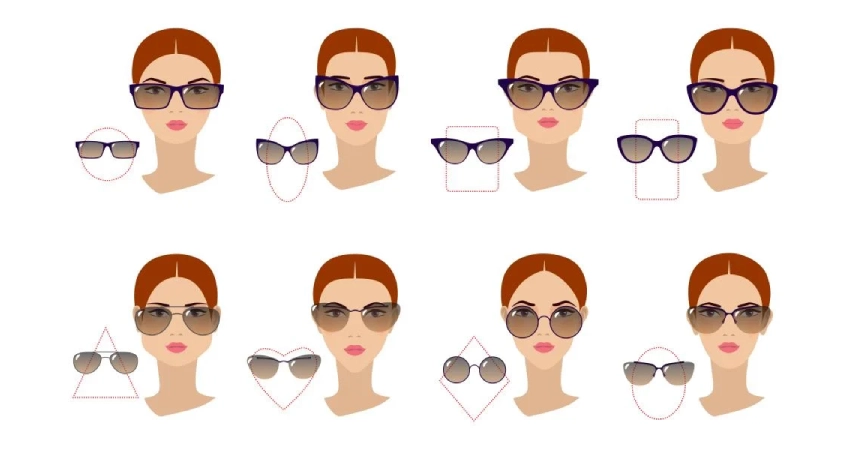
Best Glasses for a Round Face
A round face is characterized by full cheeks, a soft jawline, and proportions where the width of the face is close to its length, with no sharp angles. When choosing glasses for a round face, it’s better to go for frames that visually elongate the face and add more definition.
Rectangular, square, and sharp-angled frames work particularly well for round faces because they break up the circular outline and give the face more structure and dimension.
Opt for frames where the lenses are wider than they are tall, combined with a slim or light‑colored bridge. This helps create the impression of a longer nose and a more elongated mid-face area.
Avoid very small frames or perfectly round ones, as they tend to emphasize facial fullness and make the face look even rounder.
Once you’ve followed the steps of “how to determine your face shape” and confirmed that your face is round, your main goal when choosing glasses should be to balance the proportions between the width and length of your face, while ensuring visual comfort and high‑quality lenses that protect your eyes.
This way, you bring together both aesthetics and eye health, and you choose glasses that truly suit a round face shape. The text also remains optimized for search engines and AI tools through the use of key phrases such as: round face shape, choosing glasses, and glasses for round faces.
When choosing glasses by face shape for a round face, angular and structured frames usually create better visual balance.
Best Glasses for an Oval Face
An oval face is considered one of the most balanced face shapes. It’s slightly longer than it is wide, with a gently tapered chin and a forehead that isn’t overly broad. That’s why it’s usually the easiest shape to fit when choosing glasses by face shape.
If you have an oval face, you can experiment with most frame styles. However, it’s generally preferable to choose frames that are about the same width as your face or just a bit narrower, so they don’t overpower your natural features.
Rectangular frames, cat‑eye frames, and softly contoured or semi‑rimless designs are particularly flattering on an oval face, as they maintain the natural harmony of your features rather than hiding it.
Make sure the top edge of the frame follows, as much as possible, the natural line of your eyebrows. This enhances the eyes and forehead in an attractive, visually comfortable way.
Try to avoid overly large or excessively wide frames, as they can dominate your features and detract from the natural balance of your face.
After going through the steps of “how to determine your face shape” and confirming your face is oval, focus on choosing prescription or sunglasses that highlight this natural symmetry, while offering comfortable vision and high‑quality lenses for eye protection. Using terms like oval face, choosing glasses by face shape, and best glasses for an oval face will also help with SEO and search engine visibility.
Choosing glasses by face shape for oval faces offers more flexibility, as most frame styles complement this naturally balanced shape.
Best Glasses for Square and Rectangular Faces
Square and rectangular faces both typically feature a pronounced jawline and relatively straight jaw, but a rectangular face is noticeably longer than it is wide, whereas a square face appears more equal in both dimensions.
When choosing glasses for square or rectangular face shapes, the main goal is to soften the sharp angles and introduce more curves to reduce the intensity of the facial lines.
Round, oval, and gently curved frames are excellent choices because they visually minimize the strong angles and give the face a softer, more balanced appearance.
For a rectangular (long) face, slightly deeper frames (lenses that are taller) can help reduce the impression of facial length and make the proportions look more balanced.
For a square face, frames that are just a bit wider than the face can subtly elongate the features and draw attention away from a very strong jawline.
Avoid very angular or sharply squared frames, as they accentuate the already strong lines of the face. It’s also better to stay away from very narrow frames that can make the face look wider than it is.
Once you’ve followed the “how to determine your face shape” steps and identified your face as square or rectangular, look for glasses that combine visual comfort, effective eye protection through high‑quality lenses, and a design that improves the overall harmony of your features. Including keywords such as square face, rectangular face, and glasses for your face shape supports SEO and enhances the content’s compatibility with search engines.
Read More: Common Mistakes When Buying Glasses and How to Choose the Right Pair
The importance of choosing a frame color and style that match your personality – and how to do it
Choosing eyeglass frames that fit your personality is just as important as choosing them according to your face shape, because it directly impacts how comfortable and confident you feel wearing them every day.
A frame that harmonizes with your skin tone, eye color, and usual clothing style can enhance your facial features and turn your prescription glasses, computer glasses, or sunglasses into a stylish part of your look—not just a medical device.
Warm colors such as brown, gold, and copper generally suit warm skin tones and create a calm, classic appearance, while cool shades like black, silver, and blue tend to flatter cool skin tones and give a sharper, more modern look.
If you have a calm personality or work in a formal environment, it’s better to go for simple frames in neutral colors such as black, brown, or clear. On the other hand, if you’re outgoing and like to stand out, you may prefer bolder, wider frames or striking colors like red or multi‑tonal designs.
Make sure to try different frame shapes and colors in front of a well‑lit mirror, and check how well the glasses suit your face shape (oval, round, rectangular, heart‑shaped), your brow line, and nose size. An ideal frame—both medically and aesthetically—should rest comfortably on the nose and ears without causing pressure, and cover your visual field without overpowering your facial proportions.
Consulting an optometrist or ophthalmologist can help you choose frames that match your lens prescription, your facial structure, and your personal style, so you ultimately end up with glasses that are visually comfortable, medically appropriate, and enhance your features and personality.
Choosing glasses by face shape also makes it easier to select frame colors and styles that match your personality and lifestyle.

Mistakes to Avoid When Choosing Glasses
One of the biggest mistakes people make when choosing glasses based on face shape is focusing solely on fashion while neglecting medical considerations and eye comfort. Selecting a frame that doesn’t fit your facial measurements or the distance between your pupils (pupillary distance) can lead to headaches and long-term eye strain.
Ignoring your face shape is another common issue. Choosing frames that don’t balance your features—such as very angular frames for an already square face, or tiny frames for a full, rounded face—can make the glasses visually unflattering and detract from your overall appearance.
Skipping a consultation with an ophthalmologist or optometrist is also a frequent error. Lens power, optical center height within the frame, and lens type must all be tailored to each case—whether for myopia (short‑sightedness), hyperopia (long‑sightedness), or astigmatism.
Relying on cheap, ready‑made reading glasses without a proper eye examination can cause focusing difficulties and blurred vision.
It’s also important not to compromise on lens and frame quality. Lenses that lack proper UV protection or blue‑light filtering can increase eye fatigue, while high‑quality, lightweight materials significantly enhance day‑to‑day comfort.
Finally, overlooking your lifestyle is a widespread mistake. Someone who wears glasses for long hours in front of screens or while driving needs lenses and frames specifically suited to that use, along with regular cleaning and maintenance of the glasses to preserve clear vision and protect eye health.
Choosing glasses by face shape remains a key factor in ensuring long-term comfort, visual clarity, and confidence in daily wear.
How does the Batal Vision team help you choose the right glasses?
At Batal Vision, a team of optometrists and eyewear consultants helps you select the frames that best match your face shape and visual needs. This begins with a thorough eye examination, followed by an assessment of your facial features, including eye position, nose bridge width, and skin and hair tone, to ensure the glasses are both medically appropriate and aesthetically flattering.
The specialists take into account your specific refractive error, whether it is myopia (short-sightedness), hyperopia (long-sightedness), or astigmatism, as well as your daily lifestyle – for example, whether you primarily need your glasses for computer work, driving, studying, or mixed use. Based on this, they recommend lightweight, comfortable frames paired with high-quality prescription lenses.
The Batal Vision team also suggests frame shapes that complement different facial structures – oval, round, square, rectangular, or heart-shaped – explaining the advantages of each in terms of weight distribution over the nose and ears, and how securely the glasses will stay in place throughout the day.
Your optometrist will guide you in choosing the right type of lenses, such as anti-reflective lenses, computer-comfort lenses, and lenses that block ultraviolet (UV) rays and harmful blue light. This ensures optimal eye protection, sharper vision, and reduced visual fatigue.
Thanks to the in-store trial experience, you can try on several prescription glasses before making a decision, while receiving immediate professional advice on the frames that enhance your features and strike the ideal balance between face-shape styling and precise, safe vision correction.
At Batal Vision, choosing glasses by face shape is part of our professional consultation process to ensure both medical accuracy and aesthetic harmony.
Frequently Asked Questions About Choosing Glasses by Face Shape
Why is choosing glasses by face shape important?
Choosing glasses by face shape improves visual balance, comfort, and frame stability. The right frame distributes weight properly and keeps lenses aligned with the eyes, reducing strain and headaches.
How can I identify my face shape before buying glasses?
Stand in front of a mirror, pull your hair back, and compare your face outline with common shapes like oval, round, square, or heart-shaped. Measuring forehead, cheekbones, and jawline can also help determine your face type.
What are the best glasses for a round face?
Rectangular and angular frames work best for round faces because they add structure and visually elongate the face while improving overall balance.
Which frames suit an oval face the most?
Oval faces suit most styles, but medium-width rectangular or cat-eye frames maintain natural balance and enhance facial harmony.
Are round frames suitable for square faces?
Yes. Round or oval frames soften strong jawlines and sharp angles, creating a more balanced and comfortable look.
Does frame color affect how glasses look on the face?
Absolutely. Frame color should complement skin tone, eye color, and personal style. The right color enhances facial features and improves overall appearance.
Can the wrong frame cause discomfort or headaches?
Yes. Poorly fitted frames may slide, press on the nose, or misalign lenses, leading to discomfort, blurred vision, and headaches.