
Blog
Farsightedness: Symptoms and best correction methods using eyeglasses

What Is Hyperopia and How Does It Occur?
Hyperopia, commonly known as farsightedness, is a refractive error in which distant objects are seen more clearly than near ones. People with hyperopia often struggle with close-up tasks such as reading, working on a computer, or seeing fine details at near distances.
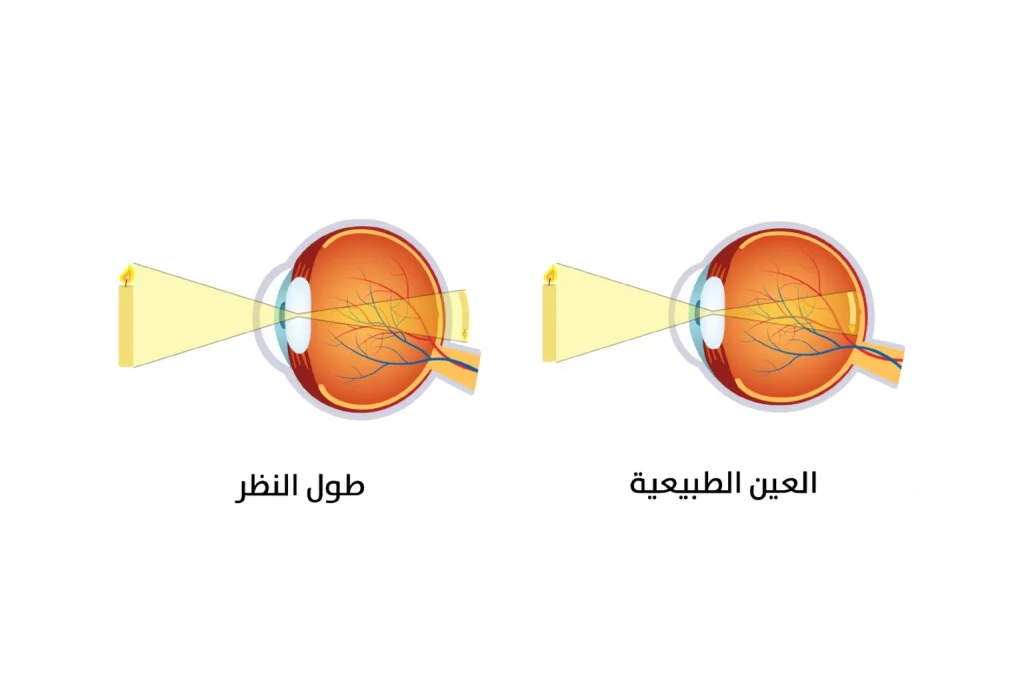
This condition develops when the eyeball is shorter than normal, or when the cornea and crystalline lens do not have enough refractive power. As a result, light rays entering the eye are focused behind the retina instead of directly on its surface.
This misfocusing leads to blurred near vision and may cause eye strain and headaches, particularly during prolonged reading or extended use of smartphones and digital devices.
Hyperopia is one of the most common refractive errors and can be easily corrected after a comprehensive eye examination. Treatment typically involves prescription eyeglasses with convex (plus) lenses that shift the focal point forward, allowing images to be focused precisely on the retina and providing clear, comfortable vision.
Understanding what hyperopia is and how it develops helps in choosing the most suitable method of vision correction with glasses and in maintaining regular eye exams to preserve ocular health and visual quality.
Common Symptoms of Hyperopia (Farsightedness) – Optimized for Search Intent
Hyperopia symptoms usually develop gradually. A person may notice increasing difficulty seeing nearby objects clearly—such as a book or smartphone screen—while distant objects remain relatively clearer. This often leads many people to search for ways to correct farsightedness with prescription glasses.
One of the most common symptoms of hyperopia is eye strain after a short period of reading or computer use, accompanied by a burning or itching sensation in the eyes. Recurrent headaches are also frequent, especially in the forehead area, after tasks that require sustained near visual focus.
Some individuals may also experience blurred or hazy vision when trying to focus on close objects, or feel the need to hold books or phones farther away to see more clearly. These signs usually indicate the need for a comprehensive eye examination and the prescription of appropriate corrective lenses to treat hyperopia and improve visual comfort.
Causes and Contributing Factors of Hyperopia (Long-sightedness)
Hyperopia occurs when the eyeball is shorter than normal, or when the cornea or lens does not have sufficient refractive power. As a result, light rays focus behind the retina instead of directly on it.
Genetics is one of the main causes of hyperopia. The likelihood of developing the condition increases if one or both parents are hyperopic. It often appears in childhood and may persist or change as a person grows older.
Age-related changes also play a key role. Over time, the lens loses some of its ability to accommodate and focus on near objects, which can worsen hyperopic symptoms, especially after the age of forty.
There are also structural factors, such as a shortened axial length of the eye or a relatively flat cornea. These features are largely determined by the eye’s anatomical development from birth.
Less commonly, hyperopia may be associated with certain eye diseases or congenital ocular abnormalities. For this reason, a comprehensive eye examination by an ophthalmologist is recommended to identify the exact cause and determine the most appropriate correction method. Prescription eyeglasses remain the safest and most widely used option to sharpen vision and enhance quality of life.
How do prescription glasses correct hyperopia (farsightedness)?
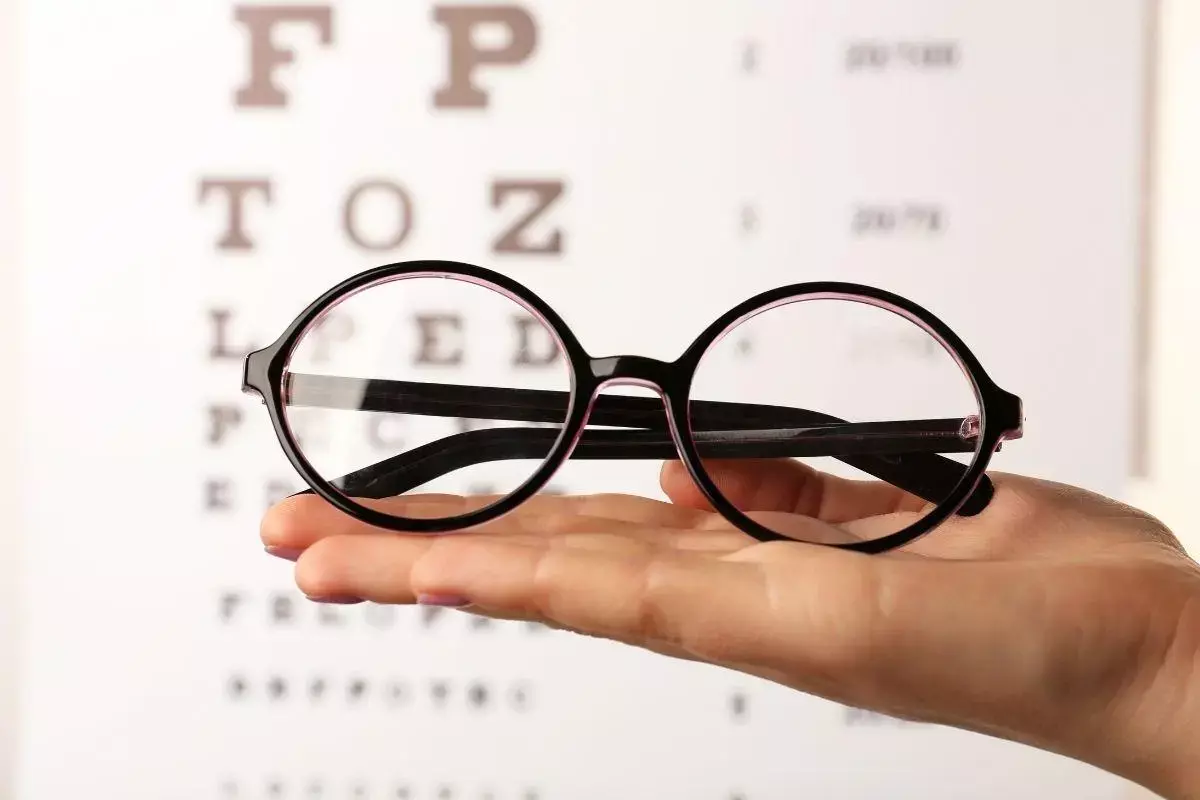
Prescription glasses correct hyperopia by using convex (plus) lenses that converge incoming light rays so they focus directly on the retina instead of behind it. This improves visual clarity, particularly when looking at nearby objects.
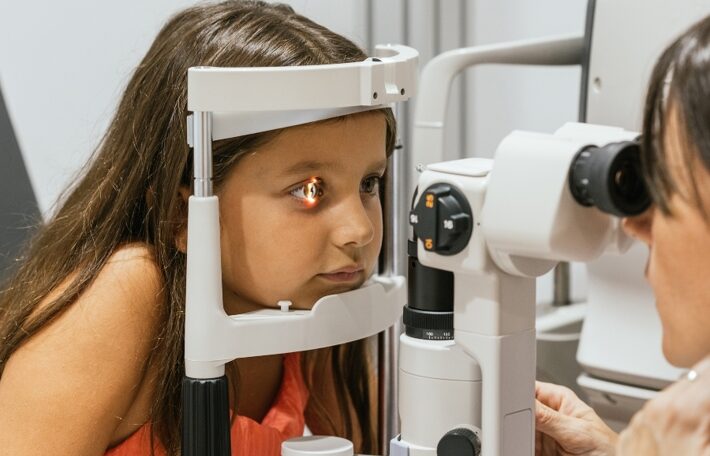
During an eye examination, the ophthalmologist or optometrist determines the appropriate positive lens power (measured in diopters, indicated with a “+”) through a refraction test, in order to compensate for the eye’s reduced ability to focus light.
With properly prescribed glasses for hyperopia, people can read, work on a computer, use their phones, and carry out daily tasks more comfortably, with less eye strain and fewer headaches.
In children, correcting hyperopia with glasses supports normal visual development and helps prevent latent or manifest strabismus that can result from the eyes constantly over-focusing to see clearly.
For these reasons, prescription glasses are considered the first-line, safest, and most widely used option for correcting hyperopia and improving both vision quality and overall quality of life, without the need for surgery.
Types of Lenses Used to Correct Hyperopia
Several types of ophthalmic lenses are used in eyeglasses to correct hyperopia, designed to enhance clarity of both near and distance vision. The most common are convex (plus / converging) lenses, which are the primary choice for treating hyperopia because they help focus incoming light directly onto the retina instead of behind it.
Eye care professionals often prescribe single-vision lenses to correct mild hyperopia in children and adults, while bifocal or multifocal (progressive) lenses are typically used for age-related farsightedness (presbyopia), allowing clear vision at different distances without needing to switch glasses.
Hyperopic lenses can be manufactured from lightweight, impact-resistant materials such as polycarbonate or high-index lenses to reduce lens thickness and minimize the “magnified eye” appearance. They may also include anti-reflective coatings and UV-filtering treatments to improve visual comfort and protect the eyes.
Choosing the appropriate type of hyperopia-correcting lenses in consultation with an ophthalmologist or optometrist helps achieve optimal visual clarity, reduce eye strain, and enhance overall quality of daily life.
Alternatives to Glasses: Contact Lenses and Refractive Surgery (for Hyperopia-Related Queries)
Alongside correcting hyperopia with prescription glasses, many people turn to alternatives such as contact lenses and laser vision correction procedures to achieve clearer vision without relying on frames in their daily life.
Hyperopia-correcting contact lenses—whether spherical or multifocal—can provide a wider, more natural visual field. They are often a good option for individuals who play sports or dislike the way glasses look, but they do require strict hygiene and proper lens care to reduce the risk of eye infections and dryness.
Refractive surgeries such as LASIK, PRK (photorefractive keratectomy), and phakic intraocular lens (IOL) implantation aim to reshape the cornea or add a lens inside the eye to provide long-term or permanent correction of hyperopia. These procedures are usually considered for patients whose prescription has stabilized and who do not have significant corneal or retinal disease.
However, these interventions are not suitable for everyone. It is essential to discuss potential risks—such as dry eye, glare and halos, and the possible need for low-power reading glasses after the age of forty—with an ophthalmologist before deciding between glasses, contact lenses, or refractive surgery for hyperopia correction.
Tips for Managing Hyperopia in Everyday Life
To comfortably manage hyperopia (farsightedness) in your daily routine, make sure you wear your prescribed corrective glasses consistently while reading, working on the computer, or using your phone. Don’t limit their use to times when your eyes already feel strained.
Choose high‑quality prescription lenses with anti‑reflective and blue‑light–filter coatings if you spend long hours in front of screens. These features help reduce eye strain and improve visual clarity.
Ensure your reading or workspace is well lit with evenly distributed lighting. Avoid reading in dim light or under direct glare on the page or screen, as this forces your eyes to work harder—something that can be particularly problematic if you’re farsighted.
Follow the 20‑20‑20 rule: every 20 minutes, look at something about 20 feet (around 6 meters) away for 20 seconds. This helps relax the eye muscles and reduces fatigue associated with near work.
Keep a comfortable viewing distance from books and digital devices—about 35–40 cm from your eyes—and avoid holding them too close to compensate for blurry vision. Getting too close can worsen headaches and visual fatigue over time.
Don’t skip regular eye examinations with an ophthalmologist or optometrist. Routine checkups are important to monitor changes in your hyperopia and adjust your prescription when needed, especially in children and older adults.
If you notice persistent symptoms—such as frequent headaches or blurred near or distance vision despite wearing your glasses—seek medical advice promptly. Accurate optical correction, combined with healthy visual habits, is key to maintaining clear, comfortable vision.
How does the Batal Vision team help you choose the ideal lenses for hyperopia (farsightedness)?
At Batal Vision, correcting hyperopia with glasses starts with a comprehensive eye examination to determine the exact degree of farsightedness and detect any associated astigmatism. This is followed by an assessment of your lifestyle and day‑to‑day visual needs, such as using a computer, reading, and driving.
Based on that, our optometrists recommend the most suitable lens options for hyperopia, such as high‑quality anti‑reflective lenses, lightweight scratch‑resistant lenses, or multifocal/progressive lenses if you also have age‑related difficulty with near vision (presbyopia).
The team also pays close attention to selecting the appropriate lens thickness according to the severity of your hyperopia, so you get glasses that are lightweight, comfortable, and aesthetically pleasing. In addition, they ensure precise measurement of your interpupillary distance (IPD) to provide sharp vision and minimize optical distortions.
Through these steps, the Batal Vision team helps you choose hyperopia lenses that combine clear vision, all‑day comfort, and a style that suits your personality—while strictly adhering to current clinical standards and ensuring a smooth, comfortable experience from examination to collection of your glasses.