

Blog
Common Mistakes When Buying Glasses and How to Choose the Right Pair


Table of Contents
Understanding the most common mistakes when buying glasses can help you avoid eye strain, poor vision quality, and unnecessary expenses, while ensuring you choose lenses and frames that truly match your visual needs.
Why do so many people make mistakes when buying glasses?
Many people get their glasses wrong because they focus only on how they look and overlook key clinical factors such as accurate refractive power, interpupillary distance (PD), the presence of astigmatism, and how the glasses will be used in daily life.
Buying prescription glasses, computer glasses, or reading glasses from non‑specialized shops or online without providing a recent, valid prescription often leads to choosing unsuitable lenses. This can result in headaches, eye strain, and blurred or unstable vision.
In addition, many people are unaware of the importance of selecting high‑quality lenses with anti‑reflective coating and blue‑light filtering, or of choosing a frame that properly suits their face shape and eye size. This often ends with glasses that are neither comfortable nor sufficiently protective.
Relying on sales staff recommendations instead of consulting an ophthalmologist or optometrist also shifts the decision from a medical one to a mostly commercial one, rather than basing it on a thorough eye examination and the person’s real visual needs.
Many people make mistakes when buying glasses because they focus on appearance and ignore medical factors…
Choosing the Wrong Size: A Common Problem and How to Fix It
Wearing glasses in the wrong size is one of the most common mistakes people make when buying eyewear. It directly affects comfort, visual quality, and even eye health.
If the frame width, temple (arm) length, or bridge size doesn’t fit your face properly, the glasses may keep slipping down, or feel too tight on the sides of your head and nose. This can lead to headaches, pressure marks and redness, and even blurred vision because the lenses aren’t staying in a stable position in front of your eyes.
To avoid this, it’s important to measure your face width and your pupillary distance (PD), then choose a frame size that matches these measurements. Always try the glasses on and make sure they sit securely without feeling too tight or too loose.
It’s also advisable to consult an optometrist or dispensing optician to confirm that the frame size suits your face shape and that the lenses are correctly aligned with your pupils. This helps ensure comfortable vision, full benefit from your prescription, and reduces the likelihood of needing frequent adjustments or replacing your glasses later.
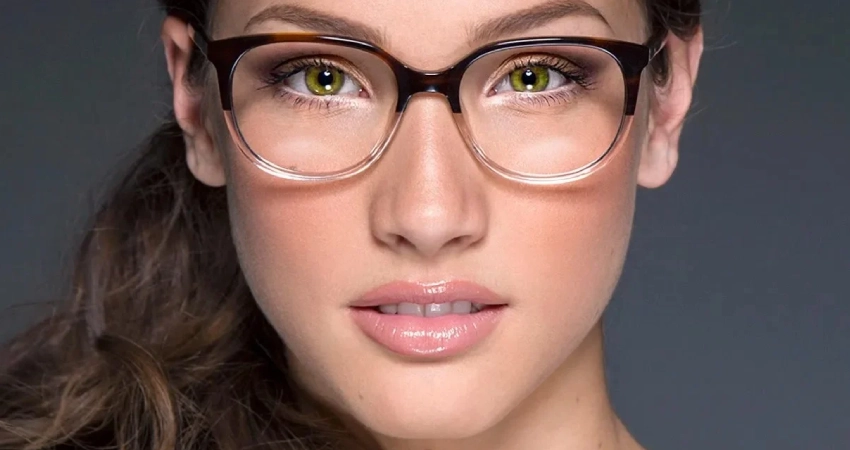
Counterfeit Lenses: How to Spot and Avoid Them
Counterfeit lenses are among the most serious mistakes people make when buying glasses. They often fail to provide adequate protection from ultraviolet (UV) radiation and may lead to headaches, blurred vision, and chronic eye strain.
To make sure your lenses are genuine and not counterfeit, look for a warranty certificate or an information leaflet that clearly specifies the level of UV protection (such as UV400 or 100% UV Protection). Also, check that the brand logo is precisely engraved on the lens or the temple arm, rather than being poorly printed or smudged.
You can also test for fake lenses by paying attention to visual clarity. High‑quality, authentic lenses provide stable, distortion‑free vision, with straight lines appearing straight and uniform. In contrast, low‑quality lenses often cause slight warping or distortion when you move the glasses in front of your eyes.
To avoid counterfeit lenses, it’s best to purchase prescription glasses or sunglasses from licensed optical stores or reputable online retailers that issue a clear invoice and warranty, and to stay away from street vendors and deals that offer unrealistically steep discounts.
Prioritizing lens quality is not a luxury; it is a fundamental step in protecting your eyes from cumulative long‑term damage and preserving healthy vision.
Ignoring Face Shape When Choosing Frames
Overlooking your face shape when selecting eyeglass frames is one of the most common mistakes people make, and it has a direct impact on comfort, visual appearance, and quality of vision.
When the frame doesn’t suit the natural contours of a round, oval, square, or heart-shaped face, your features can look unbalanced, and you may feel that the frame is too heavy or constantly slipping down your nose. This can lead to mild headaches or blurred vision because the lenses do not remain properly aligned with your eyes.
Choosing optical frames or sunglasses that complement your face shape helps distribute the weight evenly, improves the visual field, and reduces pressure on the nasal bridge and the ears, while also enhancing your facial features in a more harmonious and flattering way.
It is therefore advisable to consult an optometrist or an optician to determine which frame style best suits your face shape, and to try several designs before making a purchase. This ensures you end up with eyewear that is comfortable, functional, and appropriate both medically and aesthetically.
Read More : Eyeglass Size Guide: What Do Glasses Numbers Mean and How to Choose the Right Fit
Neglecting an Eye Exam Before Buying Glasses
Skipping a proper eye examination before buying glasses is one of the most common mistakes people make, and it has a direct impact on eye health and visual clarity.
Many individuals simply try on a frame they like at the optical store or rely on an old prescription, without undergoing a comprehensive eye exam by an ophthalmologist or optometrist.
This approach can result in choosing lenses with inaccurate power, or overlooking important visual problems such as astigmatism, myopia (nearsightedness), hyperopia (farsightedness), or chronic dry eye.
An eye exam before purchasing glasses doesn’t just determine the correct lens prescription; it also helps in detecting eye diseases at an early stage, such as ocular hypertension (elevated intraocular pressure) or retinopathy.
In addition, an eyeglass prescription should be updated regularly, especially for children and people who use digital devices for extended periods, in order to maintain clear vision and reduce headaches and eye strain.
Therefore, if you are considering buying new glasses, your first step should be a thorough eye examination and obtaining a valid medical prescription. Only then should you choose your glasses based on those findings—not on appearance alone.
Rushing into Online Purchases Without Checking the Details
Rushing to buy glasses online without carefully reviewing the medical details is one of the most common mistakes people make, and it can lead to visual problems, chronic headaches, and significant eye strain.
When ordering prescription glasses online, you must ensure that the lens power exactly matches your doctor’s prescription (sphere, cylinder, and axis for astigmatism), and double-check your pupillary distance (PD), as it directly affects visual clarity and how well the lens is aligned with your visual axis.
You should also read the lens specifications carefully, such as UV protection, blue-light filtering for screen use, and whether the lenses are lightweight or scratch-resistant, as these features have a direct impact on eye health and day-to-day comfort.
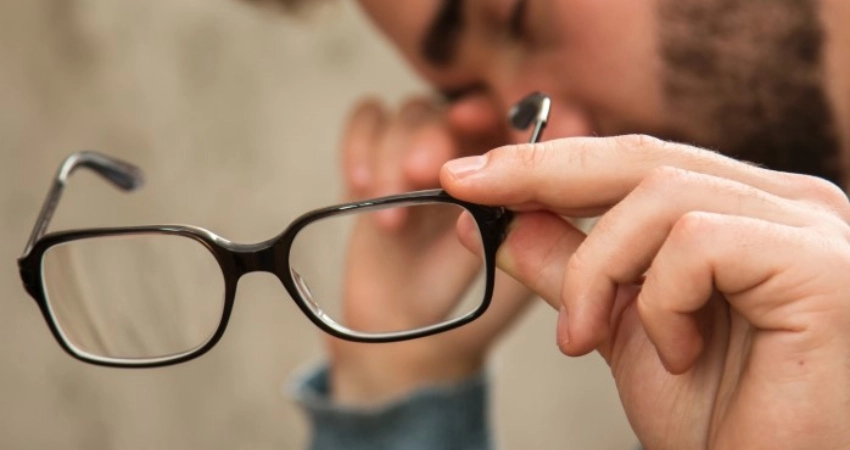
Neglecting to check the frame size (lens width, bridge width, and temple/arm length) can result in an uncomfortable pair of glasses that constantly slips down or presses on the nose and ears, causing pain and skin irritation.
Therefore, before confirming any online purchase, make sure you read the full description of the prescription glasses, compare measurements, and review user feedback, so you can choose eyewear that is medically appropriate and well-suited to your face shape and visual needs.
Essential Tips for Choosing the Perfect Pair of Glasses
To choose the ideal pair of glasses and avoid common buying mistakes, start by having a comprehensive eye examination with a trusted ophthalmologist or optometrist, so you can receive an accurate prescription tailored to your visual needs.
Opt for high‑quality prescription lenses with protective coatings against ultraviolet (UV) radiation, glare (anti‑reflective coating), and blue light—especially if you spend long hours in front of digital screens.
When selecting a frame, make sure it suits your face shape, bridge width, and interpupillary distance, and that it is lightweight and comfortable for daily wear, without leaving marks or causing pressure on the nose or behind the ears.
Try the glasses while sitting, walking, and using your phone or computer to ensure clear vision in all directions—this is particularly important with progressive lenses (multifocal lenses).
Do not overlook durability: a well‑constructed frame and scratch‑resistant lenses are a sound health and financial investment in the long term.
Finally, consult your eye care professional about the lens options that best match your lifestyle, such as anti‑reflective lenses, computer lenses, or lenses optimized for night driving, to achieve optimal visual comfort and reduce eye strain.

Why Choose Batal Vision for Your Eyewear?
At Batal Vision, we believe glasses are more than a fashion accessory — they are a medical device that directly impacts your eye health and daily performance.
Our licensed optometrists provide comprehensive eye examinations to ensure your prescription is precise and tailored to your visual needs. We offer certified, high-quality lenses with UV protection, anti-reflective coating, and blue-light filtering options to support modern lifestyles.
From accurate pupillary distance measurements to professional frame fitting based on your face shape and lifestyle, every step is handled with clinical precision.
At Batal Vision, your clarity, comfort, and long-term eye health come first.
Because better vision starts with better decisions.
Understanding the most common mistakes when buying glasses helps you protect your vision and choose eyewear correctly.
Frequently Asked Questions About Buying Glasses
How do I know if my new glasses prescription is wrong?
If you experience persistent headaches, dizziness, blurred vision, or difficulty focusing after several days of wear, your prescription may be inaccurate. Properly prescribed glasses should feel comfortable within a short adjustment period. If symptoms continue, consult your optometrist for reassessment.
Why do new glasses sometimes cause headaches?
Headaches often occur when the lens power is incorrect, the pupillary distance (PD) is misaligned, or the frame size does not position the lenses properly in front of your eyes. Poor lens quality can also contribute to visual strain.
How often should I update my glasses prescription?
Adults should generally have an eye exam every 1–2 years, while children and heavy digital device users may require more frequent evaluations. Regular updates ensure optimal clarity and prevent unnecessary strain.
Are expensive lenses always better?
Not necessarily—but high-quality lenses with certified UV protection, anti-reflective coating, and accurate optical design offer better durability, comfort, and eye protection over time.
Can incorrect frame size affect vision?
Yes. If lenses are not centered properly over your pupils, visual distortion and eye strain may occur. Frame fit plays a critical role in overall visual performance.