
Blog
What Are Anti-Reflective Lenses? Benefits, Technology, and Who Should Use Them


Table of Contents
What Are Anti-Reflective Lenses?
Anti-reflective lenses are prescription or optical lenses that feature an ultra-thin transparent coating known as an anti-reflective (AR) coating. This coating is designed to minimize glare and unwanted light reflections from the lens surface.
By reducing surface reflections, the AR coating allows more light to pass through the lens and reach the eye instead of being scattered, which enhances visual clarity and comfort—especially when using digital devices or driving at night.
Anti-reflective lenses help reduce eye strain, improve contrast sensitivity, and give the lenses a more transparent, cosmetically appealing look, making the wearer’s eyes more visible in photos and face-to-face interactions.
These lenses are widely used in prescription eyeglasses, computer glasses, and blue-light–blocking lenses, making them an ideal choice for people who spend long hours in front of screens or under strong lighting.
Anti-reflective lenses are considered a valuable investment in ocular health and visual quality, and are commonly recommended by ophthalmologists and optometrists as part of modern vision correction solutions.

Lens Coating Technology
Anti-reflective lenses are manufactured using vacuum deposition or vacour vapor deposition techniques. The lenses are placed in a specially designed low‑pressure chamber, where ultra-thin layers of metal oxides are deposited under precisely controlled thermal and optical conditions to create a multilayer coating.
Each layer is engineered with a specific thickness calculated according to the wavelengths of light, allowing surface reflections to be minimized and light transmission through the lens to be significantly improved.
This advanced coating technology delivers superior visual clarity, more natural color perception, and greater visual comfort, particularly in prescription eyeglasses and computer lenses.
Multilayer coatings also enhance scratch resistance and reduce glare from digital screens and intense light sources, with the option to incorporate additional layers such as blue-light filters and hydrophobic, anti-smudge coatings.
Altogether, these features make anti-reflective lenses an excellent choice for prolonged daily wear.
Difference Between Standard Lenses and Anti-Reflective Lenses
The main difference between standard lenses and anti-reflective (AR) lenses lies in their ability to reduce light reflections and enhance visual clarity and image quality, especially when driving at night or working in front of digital screens.
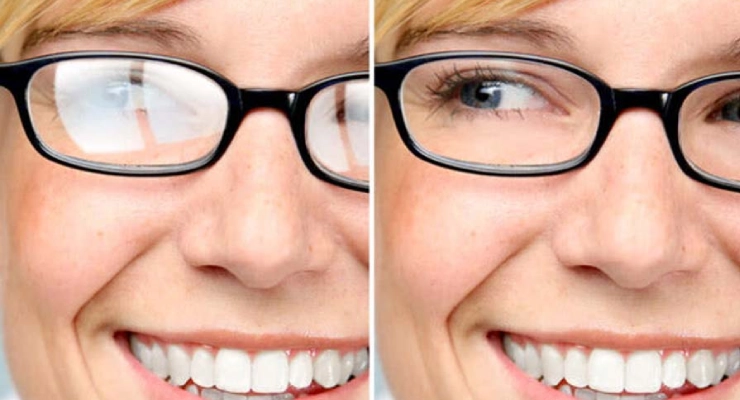
Standard lenses allow a portion of light to bounce off their surface, which can cause annoying glare, make it harder to focus, and slightly reduce visual sharpness. These surface reflections also tend to show up clearly in photos, which can be bothersome for people who care about the cosmetic appearance of their glasses.
Anti-reflective lenses, on the other hand, are coated with a special multi-layer AR coating that minimizes unwanted reflections, allowing more light to pass through the lens and reach the eye. This improves detail perception, reduces eye strain, and makes the lenses appear almost invisible when looking at the wearer’s face.
For these reasons, anti-reflective prescription lenses are an excellent choice for people who spend long hours on computers, frequently drive at night, or simply want comfortable, practical lenses that combine sharp vision with a more aesthetically pleasing look.
What are the benefits of anti‑reflective lenses?
Anti-reflective (AR) lenses offer a range of important visual and eye‑health benefits, especially for people who wear glasses for long periods or spend extended time in front of digital screens.
They significantly reduce glare and disturbing reflections from the lens surface, which enhances visual clarity and supports more comfortable vision when driving at night or using a computer or smartphone.
AR lenses also help reduce eye strain and headaches associated with prolonged exposure to bright light or strong indoor lighting, such as in offices and workplaces.
From an aesthetic standpoint, anti‑reflective lenses provide a clearer, more natural appearance in photos and face‑to‑face interactions, as the eyes are visible without lens glare. This is one of the main reasons many people prefer AR coatings on prescription glasses and high‑quality corrective lenses.
In addition, some anti‑reflective lenses are manufactured with extra coatings that are scratch‑resistant and repel dust and dirt. These features extend the lifespan of the lenses and help maintain stable visual performance and overall eyewear quality over the long term.
Who Can Benefit from This Type of Lenses?
Anti-reflective (AR) lenses are an excellent option for anyone who wears glasses on a daily basis, especially individuals who spend long hours in front of computer or smartphone screens. These lenses help reduce visual glare and eye strain while enhancing clarity of vision.
They are also strongly recommended for people who drive at night, as they minimize the glare from headlights and streetlights, which contributes to safer driving and greater visual comfort.
Students, office workers, and anyone frequently exposed to strong or constantly changing lighting conditions can benefit from them as well. AR coatings are also preferred by those who care about the aesthetic appearance of their glasses, since the anti-reflective layer makes the eyes more visible in photos and face-to-face interactions.
In general, anyone seeking sharper vision, better eye protection, and a more comfortable visual experience with prescription eyeglasses or computer glasses is a good candidate for anti-reflective lenses.
Tips from Batal Vision Before Choosing Anti-Reflective Lenses
Before purchasing anti-reflective lenses from Batal Vision, start by understanding your visual lifestyle: do you spend long hours in front of digital screens, drive frequently at night, or work under strong artificial lighting?
Choose prescription anti-reflective lenses with multi-layer (multi-coated) treatment that reduces glare, improves visual clarity, and gives your eyes a more aesthetically pleasing appearance in photos and day‑to‑day interactions.
Make sure your anti-reflective lenses provide UV protection, and preferably blue‑light protection as well if you use digital devices for extended periods.
At Batal Vision, we always recommend original lenses from trusted brands, and advise you to request a certificate stating the type of coating and warranty period. This helps ensure the durability of the anti-reflective layer and protects it from peeling over time.
Don’t forget to consult your optometrist to confirm your exact prescription and ensure the lens type suits your frame and face shape, as this enhances visual comfort and reduces eye strain in the long term.
Finally, follow the care instructions for anti-reflective lenses by using a dedicated lens-cleaning solution and a soft microfiber cloth to maintain clear vision and preserve the quality of the coating for as long as possible.